Reading papers with sentence-level provenance
The Library reader answers only from a paper's stored full text and points every answer to the exact source span: ask a PDF questions, explain it at your level, and bank quotes that carry a page-accurate citation.
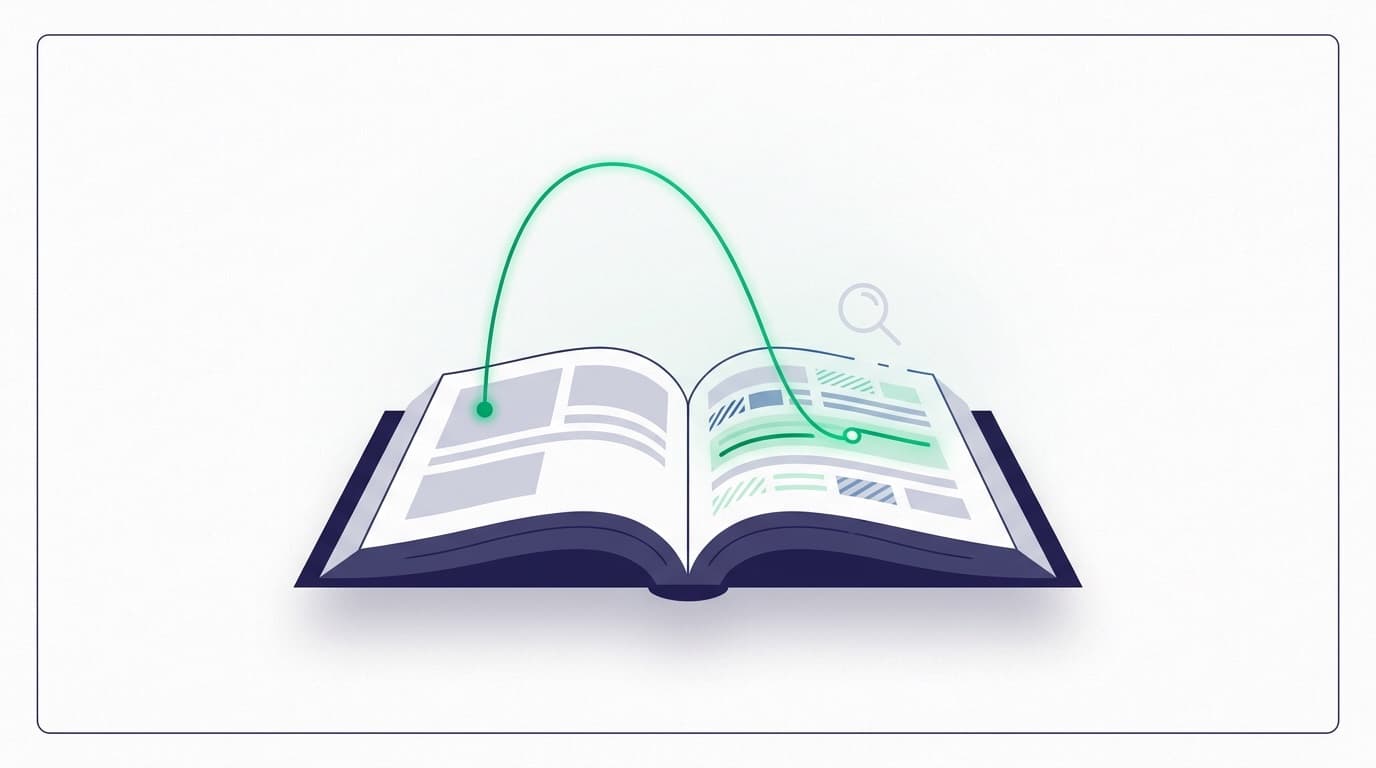
A general chatbot will happily answer a question about a paper it has never actually read, summarising from a fuzzy memory of the title. The Library reader is built on the opposite principle: it answers only from the paper's stored full text, and every answer points to the exact passage it came from. This guide walks through reading a paper that way, where provenance is sentence-level and nothing is taken on the model's word.
First, get the full text in
Provenance needs a source to point at, so the reader works on real, stored full text, never an abstract. There are two ways in. Save an open-access paper and its PDF is fetched automatically through a chain of resolvers, then parsed and split into section-aware chunks. Or upload any PDF you have legal access to, scanned pages included (OCR is built in for image-only pages).
A stepped progress bar (Upload, Parse, Chunk, Embed) shows real percentages while it works, retries on its own if a step stalls, and gives an honest reason if a publisher blocks a fetch, rather than spinning forever.
Ask the paper, and follow the answer to its source
Open a paper and ask it a question in plain language. The answer streams in first, then the claims it rests on appear one by one, each with a verification verdict from the Fact Checker: supported, partial, unsupported, or unverified. Tap any claim and the reader highlights and scrolls to the exact span it came from in the open page, with the verbatim source quote shown beside it.
The answer grounds strictly on this one paper's full text, so you are always reading what the paper actually says, not a blend of the model's training memory.
Explain a dense paper at your level
Reading is not only asking pointed questions. Switch the reader to Explain mode and it puts the paper into plain language at the reading level you choose: undergrad, grad, or expert. Explain runs through the same grounding and verification as a direct question, so even a plain-language walkthrough of the methods section stays tied to the paper's own text rather than drifting into a generic summary.
Capture quotes that carry their citation
When a passage matters, save it. "Save quote" banks the passage in your project quote bank bound to its precise location: the page, and the character offsets in the source. Because the span travels with the quote, it is not a loose string you will have to re-find later. It drops into a chapter with a real, page-accurate citation, and clicking it in the quote bank locates it again in the PDF.
There is also an evidence snapshot that pulls the sample and the key finding into a small table, each value pinned to its source line and carrying its own verdict.
Grounded AI insights, only when you ask
For a fuller pass, the AI Insights tab reads the paper's own full text and returns source-linked quotes plus how-to-use advice, with the citable claims verified by the Fact Checker against that text. This one runs the model and uses credits, so it happens only on an explicit click, never just because you opened the paper. It is the grounded, verified counterpart to the discovery-only recommendations you see while searching. A paper flagged retracted is refused here rather than mined for quotes.
The honest limits
The reader is deliberately narrow about what it will vouch for. Knowing where it stops is the point:
- Answers ground strictly on the open paper's stored full text. The reader will not pad an answer with something the paper does not contain.
- No stored full text means the honest verdict is "unverified," never a confident guess. Add the PDF and the answer becomes checkable.
- Verdicts are about the source, not your writing: "unsupported" means this paper does not back the claim, so re-cite, narrow, or cut it.
- Quotes and answers bind to real spans in the document, never to a paraphrase the model produced.